Volleyball Rebounder: A Complete 2026 Guide for Players
The volleyball rebounder has become one of the most important pieces of training equipment for players who want to improve their control, reactions, accuracy, power development, timing, and consistency in 2026. Whether you are a beginner trying to master fundamental touches, an intermediate athlete working on ball control and consistency, or an advanced competitor preparing for high-level club, university, or national trials, a rebounder allows you to practice at your own pace without needing a full team or training partner. This independence is one reason rebounders have grown extremely popular across Nigeria, Africa, the USA, and Europe, especially among athletes who want to increase their training frequency without depending on court availability or teammate schedules.
Understanding how rebounders work, why they matter, the types available, and how they can influence long-term development will help players choose the right product and extract maximum value from it. Many athletes overlook this equipment, assuming it is “basic”, but a well-designed rebounder can mimic game-like touches and force players to react more intelligently to unpredictable ball angles. In 2026, where high-level volleyball increasingly relies on fast decision-making, improved control, and the ability to adjust to imperfect passes or deflections, rebounder training has become even more essential.
This part of the article will explore the meaning, benefits, evolution, and uses of volleyball rebounders, while the second part will go deeper into drills, selection criteria, maintenance, comparison of options, and opportunities for athletes, coaches, parents, and volleyball programs.
What a Volleyball Rebounder Is and Why It Matters in 2026
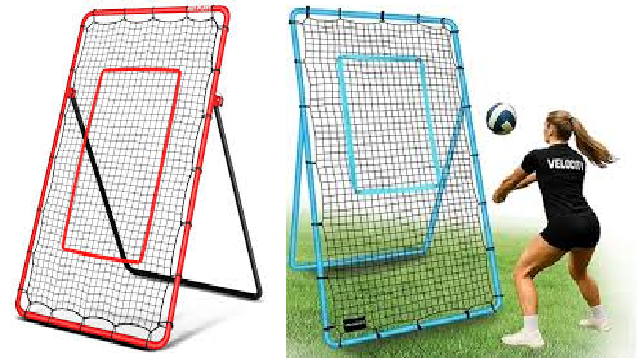
A volleyball rebounder is a training tool that returns the ball at controlled or unpredictable angles, depending on its construction. It can be a frame with an adjustable net, a tensioned spring surface, or a solid angled board engineered to create instant ball rebound. Players strike or pass the ball into the rebounder and react to the returned motion to improve touch, control, power, and technique.
In 2026, the rebounder matters more than ever because of the direction volleyball has taken globally. The modern game demands highly responsive players. Defensive specialists must reach balls that shift direction slightly; setters now work under extreme pressure to deliver fast decisions; attackers must read blocks; liberos must adjust to spins, deflections, and unexpected ball flight patterns. A rebounder provides dozens of repetitions in just a few minutes, which accelerates mastery of micro-skills that, during typical team practice, might not receive enough focus.
As the competition level rises across universities, clubs, academies, and youth leagues, athletes who gain extra repetitions outside structured team sessions often have a strong advantage. Training independence has become a major factor in player development, especially for students with inconsistent training schedules or limited access to full courts. A rebounder bridges this gap, making it possible to train anywhere—home, school field, backyard, outdoor court, hostel parking space, or gym corner.
The Role of Volleyball Rebounders in Skill Development
Rebounders support nearly every major skill category in volleyball, making them useful for both new and experienced players. The equipment allows focused training on:
First Touch Control
This is essential for liberos, defensive specialists, and all-around players. A rebounder can simulate unpredictable contact so players learn to angle their platform correctly and stabilize body control even under pressure.
Passing Consistency
Passing is one of the most frequently repeated volleyball actions, yet players rarely receive enough one-on-one repetitions during team practice. A rebounder provides the opportunity for precise passing drills without needing a coach or partner.
Setting Mechanics and Touch
Setters often require thousands of touches to develop stability, finger strength, quick release, and directional accuracy. An adjustable rebounder is particularly effective for simulating fast, unexpected returns that challenge a setter’s positioning.
Attacking Forms
Many rebounders support hitting drills, especially for younger players refining arm swing mechanics, extension, power, and timing.
Defensive Reactions
Some rebounders adjust to create unpredictable angles that help players improve dive reactions, body control, and emergency ball retrieval.
Serve Receive Improvement
Although a rebounder cannot fully recreate the power of a jump serve, it can strengthen reading ability, platform discipline, and absorption of fast-coming balls.
Ball Control and Soft Touch
Players learn to control the ball with less force, refine fingertip accuracy, and make controlled touches under pressure.
This wide skill coverage makes rebounders one of the most versatile training tools for 2026 players.
The Evolution of Volleyball Rebounders and Why Modern Versions Are Better
Older rebounders were basic square frames with loosely tied nets that returned balls inconsistently and were mostly suitable for casual training. Today’s versions are significantly more advanced due to innovations in materials science, construction strength, adjustable tension technology, and ergonomic design.
Modern rebounders may include:
-
Adjustable angles that allow training at different heights
-
Tension control systems that influence ball speed
-
Foldable steel frames for portability
-
Weather-resistant netting for outdoor use
-
Reinforced joints and stability brackets
-
Shock-absorbent feet that prevent slipping
-
Dual-surface designs for multi-skill training
These updates have made rebounders more valuable not only for individual players but also for academies, clubs, and university programs. They also support continuous training for athletes who want to maximize improvement without relying on team practice schedules.
Why Volleyball Players in Nigeria, Africa, USA, UK, and Canada Use Rebounders Today
The rise of rebounder usage across different regions is linked to broader changes in volleyball culture, infrastructure, and development trends.
Limited Court Access in Some Areas
In places where indoor courts are expensive or overcrowded, players need an alternative way to train consistently. A rebounder allows skill development even without formal facilities. This is especially helpful for African players who aspire to compete internationally but face facility constraints.
Growing Interest in University and College Volleyball
In the USA and UK, competition for university volleyball spots is high. Students preparing for trials often use rebounders to increase their ball-handling reps and demonstrate improvement to coaches.
Increasing Professional Pathways
The rise of semi-professional and professional leagues in women’s and men’s volleyball has created strong incentives for players to develop independently. A rebounder enables personalized drills that build consistency, advanced technique, and mental sharpness.
Parent-Led Youth Development
Parents increasingly invest in tools that help their children succeed in volleyball. A rebounder is safe, easy to use, and can be integrated into home training schedules, making it a popular choice.
Coaching Efficiency
Coaches use rebounders to run more effective sessions without needing multiple assistants. When training large groups, rebounders allow players to perform controlled repetitions on their own while the coach focuses on technique corrections.
These collective trends explain why rebounders have spread rapidly.
Types of Volleyball Rebounders and Their Uses
There are different types of rebounders, each designed for specific goals. Understanding these types helps players and coaches choose the best option for their level and needs.
Net-Style Rebounders
These are the most common. They use a mesh surface tightened over a sturdy frame. They are excellent for passing, setting, defensive training, and ball control.
Tensioned Spring Rebounders
These provide stronger rebounding force, which is useful for players who want faster returns for advanced setting, attack approach timing, and defensive reaction drills.
Angled Board Rebounders
These create predictable rebound directions that help players develop consistency and accuracy in passing and setting.
Multi-Angle Rebounders
These are adjustable and allow players to train multiple skills using the same equipment. They are common in professional clubs and universities.
Wall Rebounders
Some facilities install built-in rebound surfaces against training walls. These are excellent for developing strong touches but require proper spacing and safety awareness.
Small Portable Handheld Rebounders
These are used by coaches during drills to simulate quick challenges or deflections during defense and ball-control sessions.
Choosing the right type depends on training space, budget, skill goals, and level of play.
Benefits for Different Categories of Volleyball Athletes
Beginner Players
Rebounders help beginners understand how the ball reacts to touch, angle, and force. It reinforces platform discipline, encourages repetition, and helps new players gain confidence without embarrassment.
Intermediate Players
At this level, players need to refine consistency and accuracy. Rebounder drills help correct common mistakes, such as over-rotating the wrist, misjudging ball flight, or delivering unstable passes.
Advanced Players
Experienced athletes need high-intensity, high-volume training. Rebounders provide complex bounce patterns that challenge reflexes and improve body positioning during pressure situations.
Liberos
Liberos rely heavily on pass quality, digs, reaction speed, and body control. Rebounders help them practice these critical skills repeatedly.
Setters
Precise touches, soft hands, and fast decision-making thrive with rebound training. Setters can use rebounders to strengthen finger endurance, quick release, and directional setting.
Outside and Opposite Hitters
Rebounders can assist with approach timing, contact height, arm swing mechanics, and ball control after touches.
Middle Blockers
Some rebounders can assist with footwork and transition touches that help middles react faster after blocking.
Why Coaches Recommend Volleyball Rebounders in 2026
Coaches often recommend rebounders because they fill gaps in team training. Team sessions frequently focus on scrimmage, system work, serve receive, and rotations, leaving little time for individual skill refinement. With rebounders, players develop foundation skills on their own, which allows coaches to build advanced systems more easily during team practice.
Coaches also value rebounders for:
-
Increasing repetition volume
-
Teaching proper body mechanics
-
Boosting reaction speed
-
Supporting self-correcting learning
-
Enhancing individualized training plans
-
Helping players build confidence before competitions
-
Reducing dependency on teammates
Strong programs use rebounders as part of their training culture, encouraging players to incorporate them into daily sessions.
How Volleyball Rebounders Improve Strategic Understanding
A commonly overlooked advantage of rebounders is their contribution to volleyball IQ. When players encounter unpredictable ball returns, they learn to anticipate, adjust, and recover in ways that translate directly to real matches.
The equipment aids strategic development by:
-
Teaching players to stabilize under pressure
-
Helping athletes improve court awareness
-
Encouraging quicker reactions to unexpected plays
-
Refining hand-eye coordination
-
Developing intelligent shot choices during scramble situations
This combination of technical and strategic learning helps players compete more confidently and read the game faster.
Challenges Players May Face When Using Rebounders
While rebounders offer many benefits, players may encounter some challenges:
-
Inconsistent technique leading to poor returns
-
Difficulty adjusting angles
-
Over-reliance on predictable rebound patterns if equipment is not adjustable
-
Incorrect stance during repeated touches
-
Poor arm position when passing or setting
-
Overtraining without proper rest
These challenges can be addressed with correct guidance, structured drills, and progressive skill development.
Advanced Volleyball Rebounder Drills, Selection Criteria, Training Schedules, Opportunities, and Full 2026 Buyer’s Guide
This section expands the practical application of volleyball rebounders by providing detailed drills, expert-level training plans, essential selection criteria, program-level opportunities, and a comprehensive buying guide suitable for players, parents, coaches, schools, and university teams. The goal is to equip readers with everything they need to integrate rebounder training into their broader volleyball development pathway.
A rebounder may appear simple, but when used correctly, it can replace hundreds of structured repetitions that many players rarely receive during team practices. This second part focuses on enabling players to utilize the equipment effectively, minimize mistakes, and build long-term skill habits that align with modern volleyball standards.
Advanced Ball-Control Drills for Rebounder Training in 2026
Players at all levels can increase their ball-handling accuracy and consistency through structured rebounder drills. These drills emphasize technique, speed, reaction training, and endurance.
Platform Stability Passes
This drill focuses on improving arm angle, wrist stability, and platform control. The player sends controlled passes into the rebounder while maintaining low, balanced posture. Each returned ball must be directed to a set point the player imagines or marks on the ground. Repeating this helps athletes develop precision under pressure.
Left–Right Shuffle Passing
The player sets the rebounder to moderate tension. After passing the initial return, they shuffle left or right to receive the next ball in motion. This simulation builds game-like lateral movement and helps players pass accurately even when off-balance.
Reaction-Speed Pop-Up Drills
The rebounder is placed at a steeper angle to generate fast pop-up returns. The player must react quickly, using light touches to redirect the ball before it drops. It develops reflexes, timing, and emergency-control skills essential for liberos and defensive players.
High Float Touch Control
The rebounder is adjusted to create higher, slower returns. The player must keep the ball under control using gentle passes, sets, or fingertip touches. This teaches softness and touch variation—skills necessary for intelligent gameplay.
Advanced Setter Repetition Drills
Setters strike the rebounder with overhead finger action to receive unpredictable returns. They must reposition rapidly to set the ball cleanly in different directions. This drill builds finger strength, quick footwork, and mental agility under chaotic conditions.
Drive-Pass Power Absorption
Players send strong balls into the rebounder and absorb high-velocity returns using proper platform angles. This is useful for building serve-receive stability and defensive strength.
Transition Touch Drill
Players pass or dig the ball into the rebounder, immediately switch to ready posture, and react to the returned ball. This drill enhances transition movement essential for attackers, liberos, and back-row players.
Attack Development Drills Using Rebounders
While rebounders are commonly used for passing and control, they also support early-stage attacking development.
Arm-Swing Mechanics Practice
Players strike the rebounder from a hitting height with a full arm swing. While it does not completely simulate a spike, it reinforces hand contact, extension, and wrist action.
Approach Timing Coordination
Setting the rebounder at an angle to return higher balls helps hitters practice approach footwork, jump timing, and controlled contact.
Controlled Roll-Shot Training
Hitters can practice finesse shots such as roll shots, tips, and controlled placements. The rebounder returns the ball in ways that reinforce accuracy and technique.
Off-Speed Adjustment Training
Players practice adjusting to unpredictable angles from the rebounder, learning how to hit calmly under pressure.
Defensive and Reaction Drills
Rebounders excel at improving defensive instincts.
Dive and Recovery Challenge
The rebounder is set to return fast or unpredictable balls. Players dive to recover, quickly stand, and continue the sequence. This sharpens defensive resilience and floor movement.
Chaos-Control Challenge
The rebounder is angled to create unpredictable patterns. Players must maintain calm platform control and high readiness. This drill simulates broken plays that occur frequently during competitive matches.
Overhand Defense Training
The rebounder helps players learn controlled overhead defensive touches, a skill that becomes essential during high-level games where balls come at high speed.
Structured Weekly Training Plan Using a Volleyball Rebounder
This routine helps players integrate rebounders into their schedule:
Beginner Players
Three sessions weekly, focusing on platform control, gentle touches, and basic passing.
Intermediate Players
Four to five sessions weekly. Drills include shuffle passing, touch variation, overhead control, and basic setter work.
Advanced Players
Five to six sessions weekly, combining high-intensity drills, fast return reactions, defensive recovery, setting precision, and hitting coordination.
University Players
Daily short sessions to maintain consistency. Sessions focus on advanced touch, fast-paced reaction drills, and setter accuracy.
How Coaches Can Integrate Rebounders Into Team Sessions
A well-organized coach uses rebounders as supplemental training tools to solve common challenges in team development. They help reduce idle time, increase repetition volume, and reinforce key fundamentals.
Key strategies include:
Warm-Up Progressions
Players start with simple touches into the rebounder to warm the shoulders, hands, and platform.
Skill Stations
Coaches divide the team into groups, each performing rebounder-based drills while other groups practice serving, blocking, or attacking. This maximizes training quality in limited time.
Setter-Focused Work
Setters use rebounders between team drills to maintain finger conditioning and accuracy.
Defensive Read Training
Coaches adjust rebounders to return unpredictable balls and create defensive chaos simulations.
This structured integration leads to more efficient sessions and improved overall team quality.
Opportunities in 2026 for Players Using Volleyball Rebounders
Volleyball rebounders create opportunities beyond general skill improvement. In 2026, players increasingly use rebounder-enhanced training to pursue scholarship pathways, university opportunities, and club-level advancement.
University Scholarships
Consistent training with a rebounder helps players develop high-quality passing, setting, and defensive skills, which are essential during university trials for US, UK, and Canadian institutions.
Club-Level Opportunities
Athletes who demonstrate independent training discipline stand out during club tryouts. Rebounder training speeds progress and gives players a competitive advantage.
Online Volleyball Programs and Virtual Training
Many athletes join online coaching programs, submitting recordings of rebounder drills. This allows players in Nigeria, Ghana, Kenya, and other African regions to access global coaching networks.
Youth Development Pathways
Parents who invest in rebounders help their children grow faster, positioning them for selection into academies and state-level programs.
Semi-Professional and Professional Aspirations
Rebounder training helps players fast-track technical skills, making them more competitive when pursuing higher-level opportunities.
How to Choose the Best Volleyball Rebounder in 2026
Selecting the right rebounder requires careful attention to performance, durability, and usability. These factors help players choose the best model based on their budget, space, goals, and training needs.
Frame Strength
A strong steel or reinforced alloy frame supports long-term training. Weak frames bend or wobble.
Net Tension and Quality
The net must return the ball consistently. Adjustable tension is ideal for advanced training.
Height and Angle Adjustability
Players benefit from rebounders that tilt to different angles for passing, setting, hitting, and defensive drills.
Portability
Foldable, lightweight models are suitable for students, hostel residents, and home-based players.
Weather Resistance
Coated frames and durable nets withstand outdoor conditions.
Stability
Non-slip feet and weight distribution ensure safe use on different surfaces.
Skill Level Compatibility
Beginners need simpler rebounders; advanced players require tension-adjustment and multi-angle features.
Mistakes Players Should Avoid When Training With Rebounders
Even experienced players sometimes misuse rebounders. Common mistakes include:
Incorrect Distance
Standing too close or too far reduces the effectiveness of drills.
Excessive Force
Beginners often hit or pass the ball too hard, losing control of the returned angle.
Poor Posture
Bent backs, unstable platforms, or stiff footwork undermine progress.
Unstructured Sessions
Training without a plan leads to slow development. Players need defined drills and objectives.
Overtraining
Repeated touches may strain the shoulders or wrists. Players must rest properly.
Relying Only on Rebounders
While rebounders are excellent, players must also incorporate team drills, scrimmages, and live gameplay.
How Volleyball Programs and Schools Can Use Rebounders
Schools, academies, and clubs benefit from rebounders because they reduce the need for high staff numbers and enable continuous skill development even when court time is limited.
Benefits include:
Efficient Training for Large Groups
Multiple rebounders allow simultaneous training stations.
Better Fundamental Development
Players gain hundreds of touches before scrimmage.
Easy Conditioning Integration
Rebounder drills can be added to physical conditioning sessions.
Affordable Skill Progression
Schools can improve training quality without major investment in expensive equipment.
Maintenance and Care for Maximum Durability
Rebounders last longer with correct maintenance:
-
Clean the net regularly
-
Tighten the frame bolts after heavy use
-
Store in a dry area
-
Avoid extreme tensioning
-
Check for fraying net sections
-
Inspect frame joints for stress marks
-
Keep the legs stable on even surfaces
Proper care ensures consistent rebound performance.
Full Buyer’s Guide for Volleyball Rebounders in 2026
This guide helps players choose the right rebounder based on purpose, budget, and environment.
For Beginners
Choose a simple, moderately sized rebounder with stable netting. Focus on passing and basic control.
For Intermediate Players
Select a rebounder with adjustable angles and slightly stronger tension.
For Advanced Players
Choose a professional rebounder with high-tension netting, adjustable angles, and reinforced frame.
For Coaches
Invest in at least two medium and one professional-level rebounder for training stations.
For Parents
Choose portable rebounders easy to set up in small spaces.
For School Teams
Durable frames with weather-resistant designs are essential for long-term use.
For University Athletes
A multi-angle rebounder supports all skill areas.
Why Volleyball Rebounders Will Remain Essential Beyond 2026
Volleyball is now a fast-paced, precision-focused sport with increasing global participation. Rebounders allow players from diverse environments—including students with limited access to courts and athletes training independently—to achieve top-tier skill development. As colleges and clubs become more competitive, rebounder training will continue to be a reliable tool for improving reaction speed, control, consistency, and volleyball intelligence.
In 2026 and beyond, rebounders will remain one of the most effective and accessible training tools for developing complete volleyball athletes.